
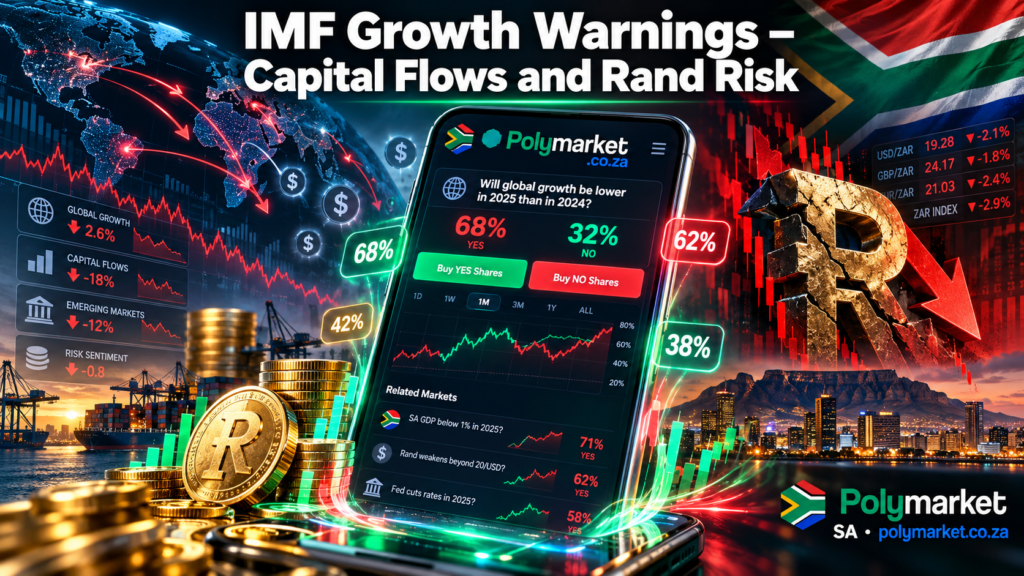
It’s Friday 9 October 2026, and the latest round of IMF growth commentary has landed with a cautious tone. Officials have flagged uneven global activity, still-sticky inflation in places, and the risk that higher-for-longer rates in major economies keep capital selective. That is not a crisis call. It is a reminder that emerging markets still have to earn investor attention.
For South Africa, the transmission is familiar. Cautious global capital can support the Dollar, limit inflows, and leave the Rand more exposed even when commodity headlines are mixed. Traders on Polymarket.co.za are using the IMF tone to judge whether October stays a Dollar-led month or whether risk appetite can broaden.
1. A Cautious IMF Tone Keeps the Dollar in the Driver’s Seat
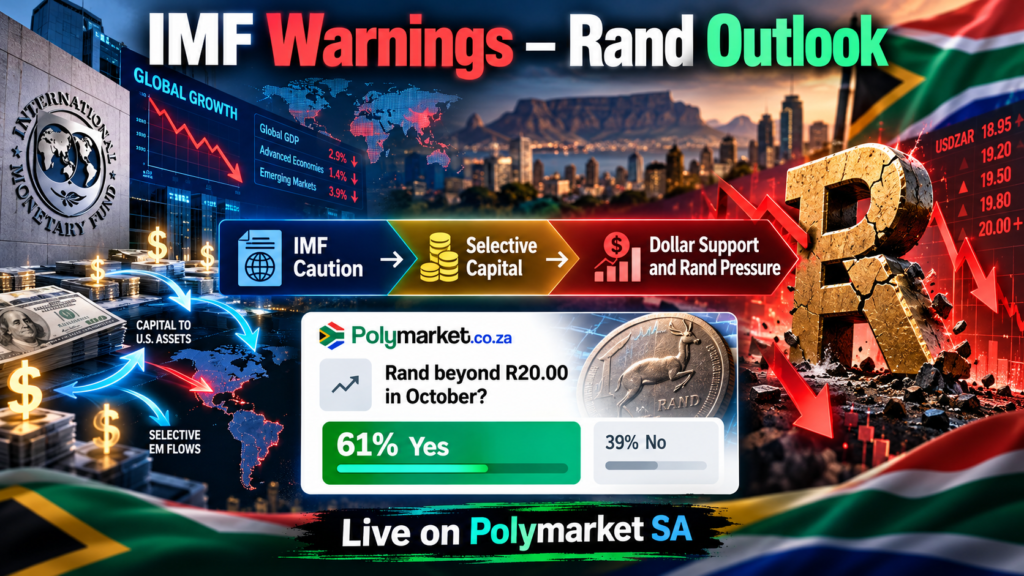
When multilateral institutions warn that growth is uneven, investors often stay closer to Dollar liquidity. That does not require a recession forecast. It only requires enough doubt to delay fresh emerging market allocations.
On Polymarket SA, traders are pricing the near-term currency outlook:
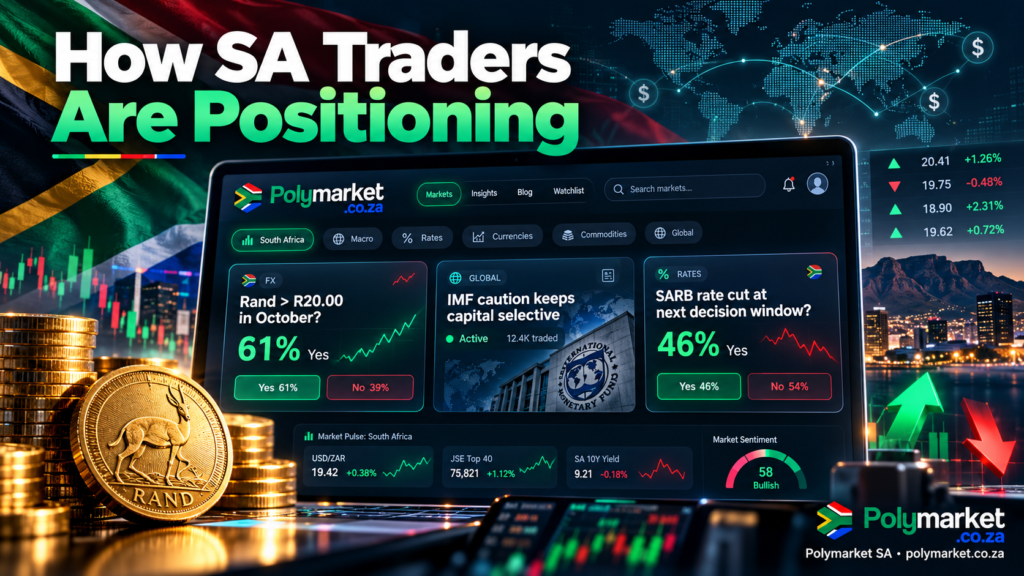
- The probability of the Rand weakening beyond R20.00 to the USD in October is currently trading at approximately 61% Yes.
- Markets linked to cautious capital flows and Dollar strength have seen steady Friday interest.
2. Export Demand and the Rand Are Not the Same Trade
A cautious global growth view can weigh on commodity demand. It can also weigh on the Rand through capital flows. Those two channels do not always move together, which is why South African traders are separating export receipts from currency pressure.
Current pricing on Polymarket SA reflects that split:
- Markets related to uneven commodity demand remain active after China’s post-holiday return.
- Traders are watching whether IMF caution caps any bounce in risk appetite into next week.
3. SARB’s Policy Backdrop
The South African Reserve Bank still has to balance imported inflation against domestic growth. A cautious global capital environment does not force a decision, but it does make an early cut harder to sell if the Rand stays soft.
On Polymarket SA, the market currently shows:
- The probability of a SARB rate cut at the next decision window is priced at approximately 46% Yes.
- Traders see the IMF tone as part of the external backdrop, not as a standalone policy trigger.
4. How Traders Are Positioning Into the Weekend
Traders on Polymarket SA are treating the IMF warnings as a sentiment input rather than a one-day event. Current popular strategies include:
- Positions that capture the probability of continued near-term Rand pressure if capital stays selective
- Hedged views that allow for a bounce if next week’s data soften the Dollar
- Selective interest in how capital-flow caution could influence SARB cut odds
5. Domestic Factors Can Still Cut Across the Global Script
Even with IMF headlines leading the conversation, South African export receipts, logistics, and local energy developments can still move the Rand. Traders are keeping those domestic inputs in view in case they either amplify or offset the external caution.
How Smart South African Traders Are Positioning Right Now
The real edge on Polymarket SA this week comes from reading official growth warnings as a capital-flow signal. Successful traders are focusing on:
- Whether IMF caution keeps investors selective on emerging markets
- The impact on the Rand if the Dollar stays supported
- The SARB’s likely response if currency weakness and imported inflation risks persist
How to Start Trading Global Events Through SA Eyes in Under 5 Minutes
- Visit Polymarket.co.za and create an account.
- Complete the quick local ID verification process.
- Deposit funds using EFT or your preferred South African payment method.
- Explore the Economy, South Africa, and Global market categories.
- Select contracts that best reflect your view on the Rand, capital flows, or SARB policy.
- Buy Yes or No shares and actively manage your positions as new information emerges.
Why South Africans Are Choosing Polymarket.co.za
Polymarket.co.za gives traders direct exposure to how global growth warnings and capital-flow shifts affect South Africa — from currency weakness to export demand and central bank policy — with real-time pricing and no traditional bookmaker margins.
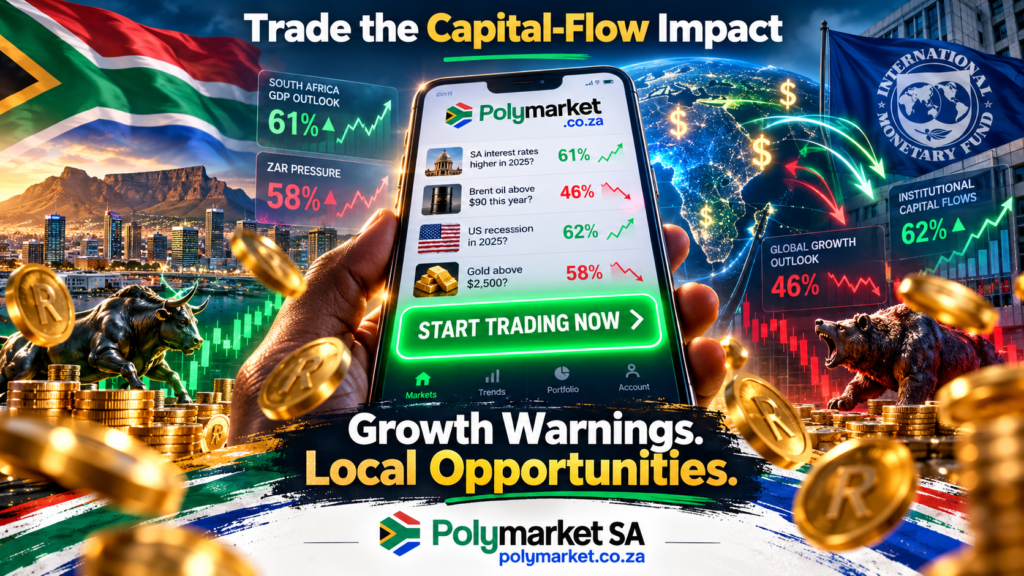
Don’t Just Watch Global Events — Trade Their South African Impact
IMF growth warnings, cautious capital flows, and the implications for the Rand are creating clear trading opportunities right now.
Sign up today and start trading the global impact on South Africa.
FAQ – Global Events & Prediction Markets South Africa 9 October 2026
Q: Is Polymarket legal and regulated in South Africa?
A: Yes. Polymarket.co.za is fully regulated and built specifically for South African users.
A: Yes. Polymarket.co.za is fully regulated and built specifically for South African users.
Q: Why do IMF growth warnings matter for the Rand?
A: They can keep global capital cautious toward emerging markets, support the Dollar, and leave the Rand more exposed even when local commodity headlines are mixed.
A: They can keep global capital cautious toward emerging markets, support the Dollar, and leave the Rand more exposed even when local commodity headlines are mixed.
Q: Can I trade these markets on my phone?
A: Yes, the platform is fully mobile-optimised.
A: Yes, the platform is fully mobile-optimised.
Q: What makes these markets different from traditional betting?
A: There are no bookmaker margins — winners take the full pool based on the actual outcome.
A: There are no bookmaker margins — winners take the full pool based on the actual outcome.
Official content partner of Polymarket.co.za – South Africa’s #1 Prediction Market