
1. Higher Shipping Costs Raise Import and Export Expenses
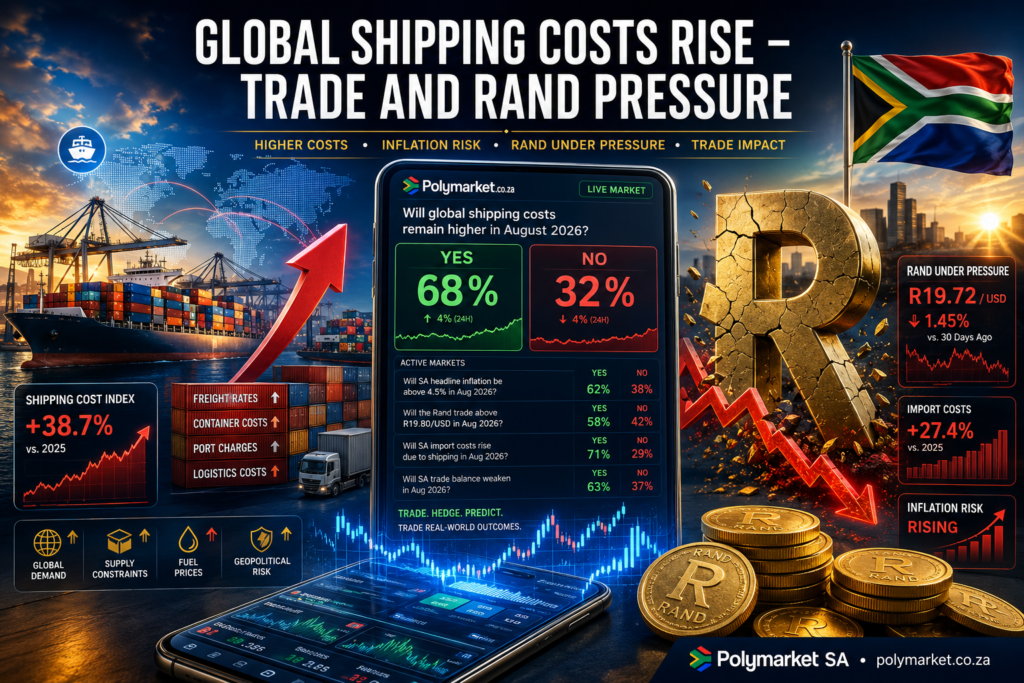
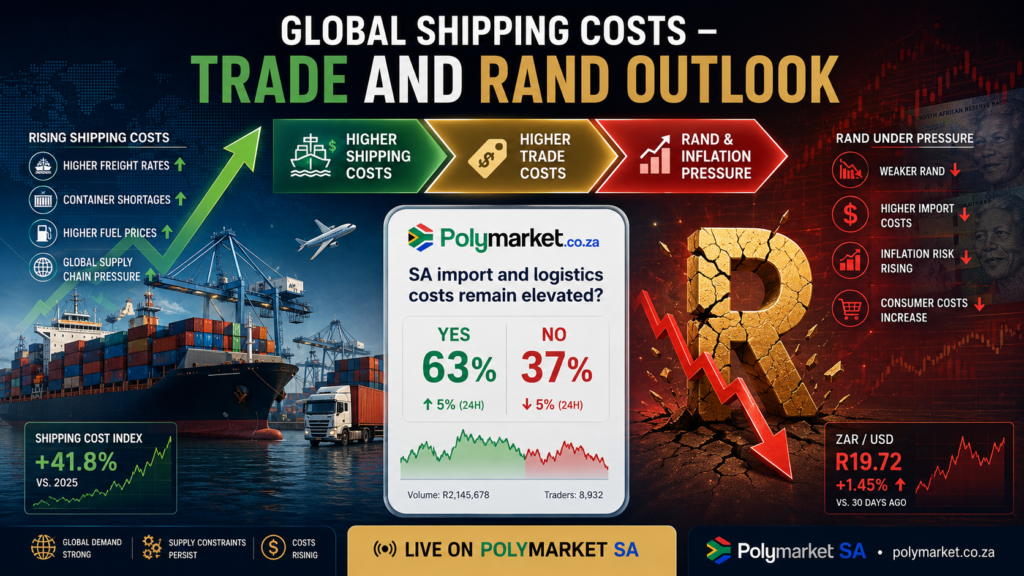
Increased global freight rates directly raise the cost of bringing goods into South Africa and shipping local products to international markets. This affects a wide range of sectors, from retailers and manufacturers to commodity exporters.
On Polymarket SA, traders are pricing the near-term impact:
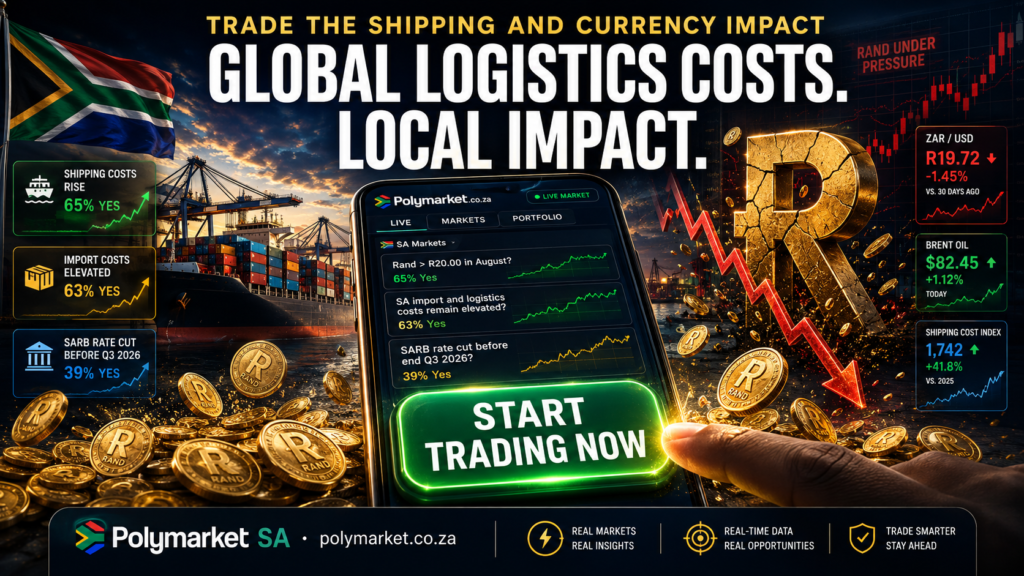
- The probability that South African import and logistics costs remain elevated through August is currently trading at approximately 63% Yes.
- Markets linked to higher landed costs and trade-related inflation pressures have seen steady interest.
Traders recognise that sustained higher shipping costs can act as a broad-based cost increase across the economy.
2. Implications for the Rand and Trade Competitiveness
Higher logistics costs can weigh on South Africa’s trade balance by making exports less competitive and imports more expensive. When combined with a weaker Rand, the effect on imported inflation becomes more pronounced.
Current pricing on Polymarket SA reflects this dynamic:
- The probability of the Rand weakening beyond R20.00 to the USD in August is currently trading at around 65% Yes.
- Traders are balancing the direct cost pressures from logistics against broader currency and risk factors.
3. SARB’s Policy Environment
Elevated shipping and logistics costs add to imported inflation risks at a time when the South African Reserve Bank is already navigating a complex inflation and growth environment. This can reduce the room for monetary policy easing.
On Polymarket SA, the market currently shows:
- The probability of a SARB rate cut before the end of Q3 2026 is priced at approximately 39% Yes.
- Traders expect the SARB to remain cautious while monitoring both global cost pressures and local inflation data.
4. How Traders Are Positioning Around Logistics and Currency Risks
Traders on Polymarket SA are treating the current rise in shipping costs as a multi-layered risk.
Current popular strategies include:
- Positions that capture the probability of sustained higher import and logistics costs
- Hedged views on Rand performance that balance cost pressures against other commodity and risk factors
- Selective interest in how logistics developments could influence SARB policy expectations
These multi-factor approaches help traders manage the interconnected nature of trade costs, currency movements, and monetary policy.
5. Domestic Logistics and Port Performance

How Smart South African Traders Are Positioning Right Now
The real edge on Polymarket SA comes from correctly assessing how global logistics cost increases interact with local inflation and currency dynamics.
Successful traders are focusing on:
- The sustainability of the current rise in shipping rates
- The pass-through into South African import costs and inflation
- The SARB’s likely response to any sustained pressure on the inflation outlook
This balanced perspective helps traders navigate the current environment more effectively.
How to Start Trading Global Events Through SA Eyes in Under 5 Minutes
- Visit Polymarket.co.za and create an account.
- Complete the quick local ID verification process.
- Deposit funds using EFT or your preferred South African payment method.
- Explore the Economy, South Africa, and Global market categories.
- Select contracts that best reflect your view on the Rand, trade costs, or SARB policy.
- Buy Yes or No shares and actively manage your positions as new information emerges.
Why South Africans Are Choosing Polymarket.co.za
Don’t Just Watch Global Events — Trade Their South African Impact
Follow SAPolyMarket for daily hot market alerts real-world trending events.
FAQ – Global Events & Prediction Markets South Africa 5 August 2026
A: Yes. Polymarket.co.za is fully regulated and built specifically for South African users.
A: They increase the cost of imports and exports, add to inflation pressures, and can weigh on the competitiveness of local producers and exporters.
A: Yes, the platform is fully mobile-optimised.
A: There are no bookmaker margins — winners take the full pool based on the actual outcome.